Music is Never Born in a Vacuum
Why music scenes may matter even more in an age of unlimited distribution.
By Kevin Flick
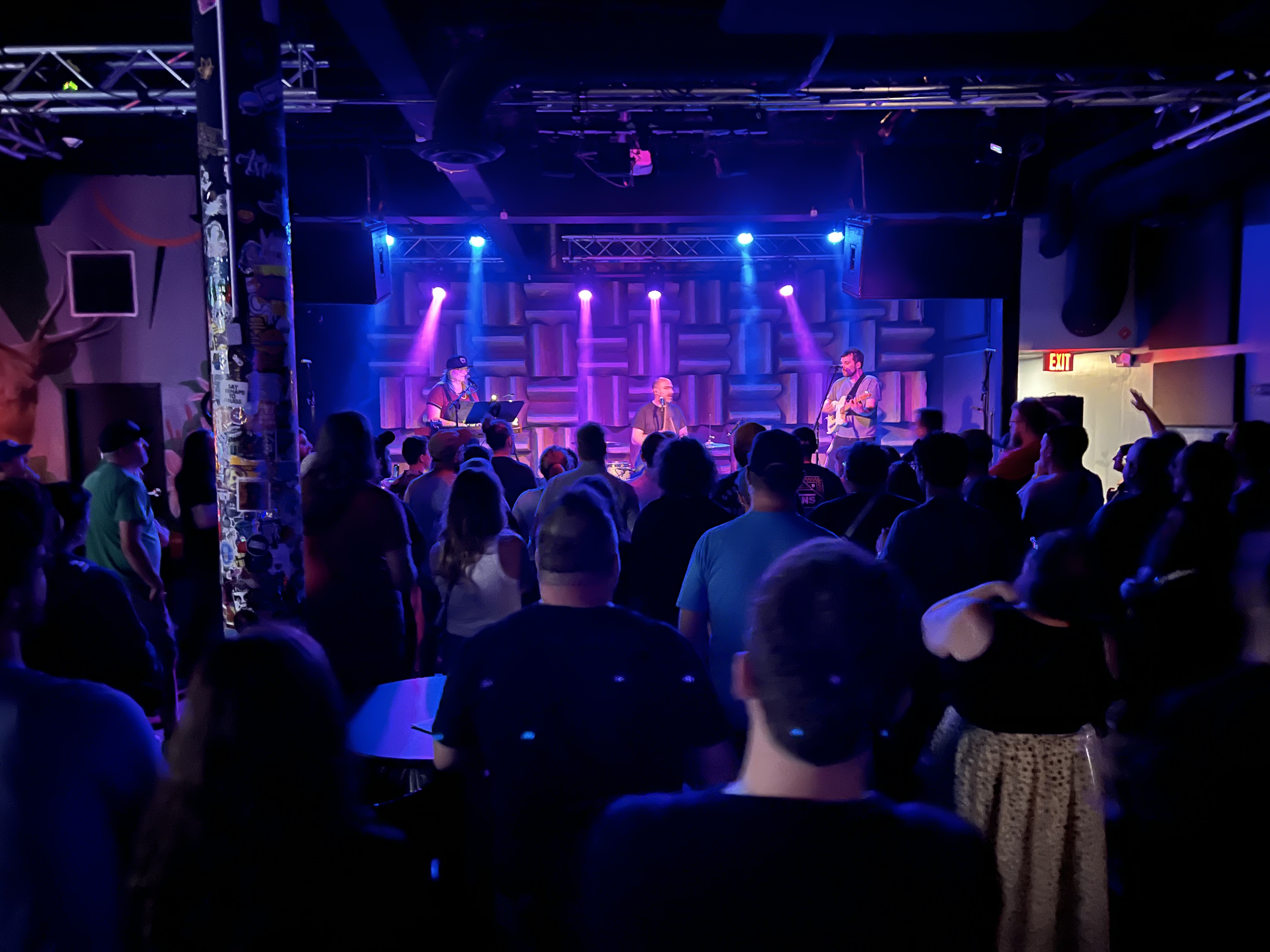
Music is never born in a vacuum. Even if one isolated themselves in a cabin to record an album, the foundation for the sounds and tones they pursue are at minimum subconsciously influenced by the work of other artists. Typically, these patterns of sounds, melodies, choices of instrumentation, and production approach are shaped within a local community of artists or a subgenre.
In 2004, Andy Bennett and Richard A. Peterson published a book called Music Scenes: Local, Translocal and Virtual1. This book is a collection of fourteen original essays on music scenes, each written in the 1980s and 1990s. They studied aspects of music scenes, how they were formed, how they thrived and spread, and how they changed over time.
Much has changed since 2004, a time when music downloads were challenging CD sales. Music streaming took shape in 2008 with the launch of Spotify and the idea of music distribution changed dramatically with it. In 2004 there were five multinational juggernauts controlling 80% of commercial music. Today, three majors (Universal, Sony, and Warner) distribute just 3.8% of commercially distributed recordings, yet they gain 70% of the revenue. Every day, and average of 106,000 ISRCs2 are delivered, whether they're new songs or live recordings... or 38.7 million recordings a year; only 1.5 million recordings are from the Big Three.
Music scenes are just as important today to development of music, if not increasingly so. Where it was highly difficult to record and distribute your own music thirty years ago, today it has become the standard. While a music scene tended to be hyper-local prior to digital distribution, they are largely a hybrid of local, translocal and virtual relationships today. It's important to note that scenes were also translocal, extending beyond the originating scene through touring, independent record labels, record trading, magazines, zines, and college radio. What was true then and is still true today, a music scene is where, "clusters of producers, musicians, and fans collectively share their common musical tastes and collectively distinguish themselves from others," as Bennett and Peterson explain.
As critical as music creation and distribution is for a music scene, they extend further. They often provide personal identity and a place to belong. This is as true for the artist as it is to the fan. What is key is the relationships that are formed within a music scene. This keeps the music scene a human space and not the result of marketing ploys.
It is in these clusters of producers and artists that music genres form, develop, evolve. This happens at venues or house shows that are part of the scene, in the studio where likeminded musicians are brought together, and in online communities where they can share their work and receive immediate feedback. Fans are just as important today as they were thirty years ago, though the community of fans span vast regions, not just familiar faces at local shows.
I will be writing a series of articles on Music Scenes, responding to the papers in the book Music Scenes along with other sources. I hope you enjoy this study.
Footnotes
-
Music Scenes: Local, Translocal and Virtual was written by Andy Bennett and Richard A. Peterson, published in 2004. ↩
-
International Standard Recording Code is a 12-character digital fingerprint for sound recordings and music videos. Each recording or audio master receives a unie ISRC. The help track royalties and uniqueness. They include four segments: a Country Code, Registration Code, Year of Reference, and Dsignation Code. ↩